

 >> ENGLISH VERSION BELOW
Ron: Lidi, já
vám něco vysvětlím. Ty riffy, co píšu — ty se ani nedají pořádně zapsat. Dělám
věci, které nejsou ani zaznamenatelné. Spousta zvuků, pull-offů… možná zahraju
3 nebo 4 tóny na každém pražci. Umím vytáhnout harmonii na konkrétní tón, ale
nedokážu to pořádně přepsat. Jen některé části. A když to neumím zapsat přesně,
radši to nezapisuju vůbec. Všechno je to z paměti a svalové paměti. Pustím si
to a musím to znovu rozluštit.
Takže jste vlastně všichni čekali na Mikea Hellera…?
Danny: Bylo to kolektivní. Celou dobu jsme hráli koncerty. Nezaháleli jsme.
A
nebyl na vás žádný tlak ze strany Willowtip?
Danny: Ne. Domluvili jsme se s nimi dopředu. Řekli jsme, že
máme napsané album. A oni na to: „Super.
Až to nahrajete, dejte vědět.“
Jste s Willowtip spokojení?
Danny: Jo, s tímhle albem to bylo výborné. Hodně nám pomohli.
Když jim napíšu, hned odpoví. Takže fakt dobrá zkušenost.
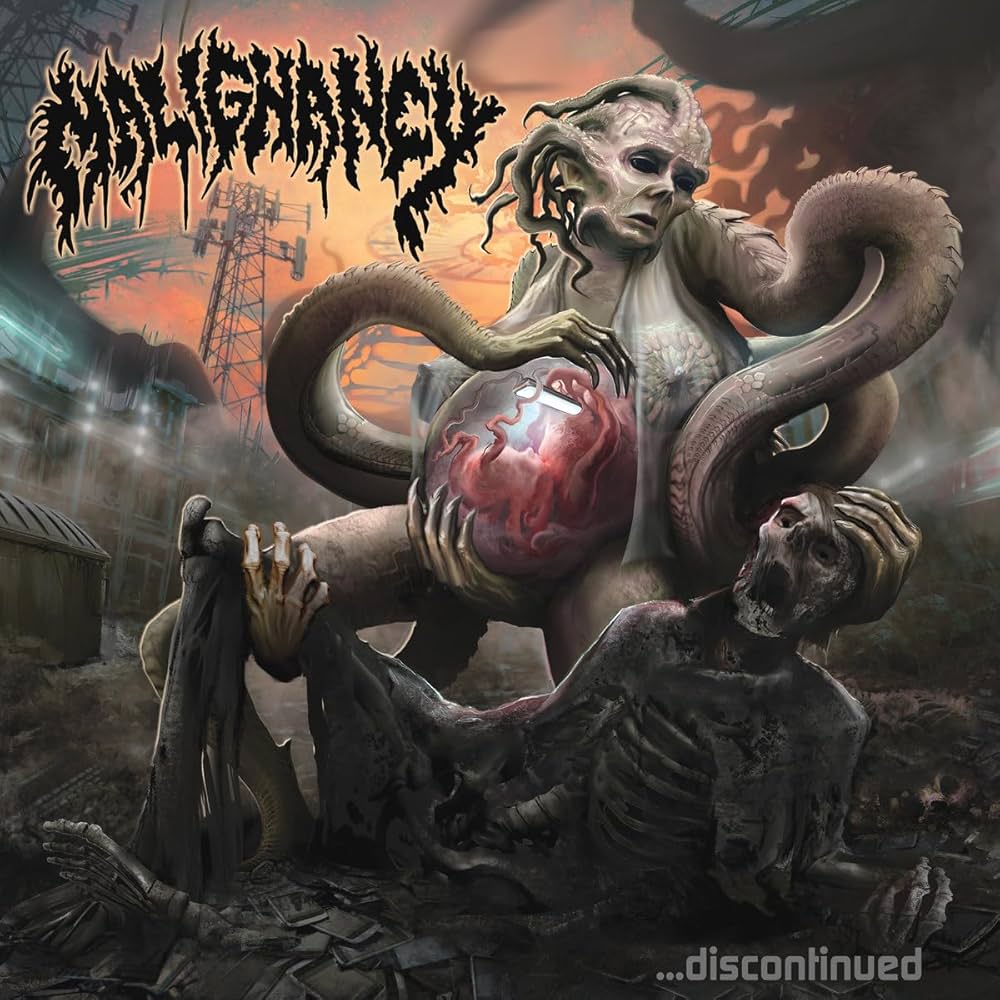
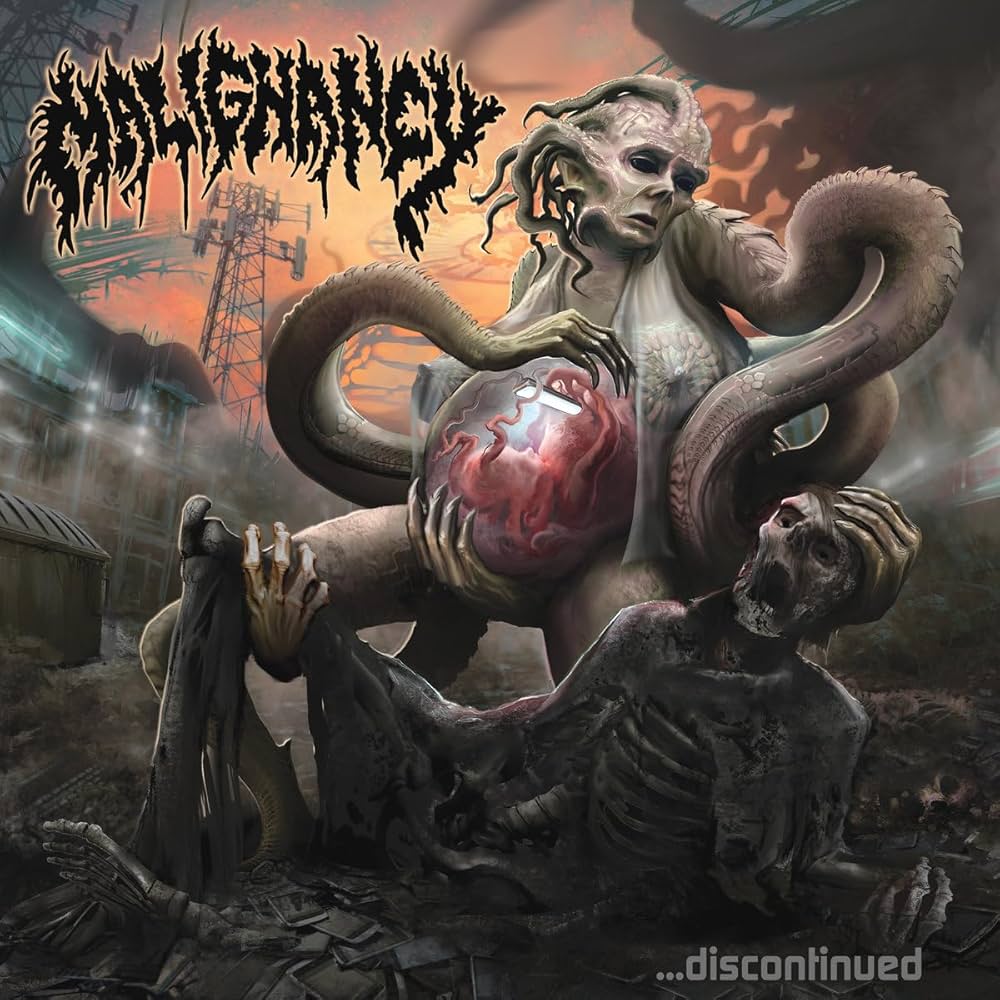
Jaké máte na …Discontinued ohlasy?
Danny: Všechny hrozné. Všem se to nelíbilo. Chvíli jsem uvažoval o sebevraždě… (směje se) Ne, vážně — reakce jsou super. Produkce i výkony jsou výborné. Je to naše nejlépe znějící nahrávka vůbec. Fakt mě to nadchlo — a fanoušky taky.
Alex Weber: Z technického hlediska je to podle mě zatím nejšílenější Malignancy album — alespoň pro mě. Co se týče hraní, je mnohem náročnější, složitější a propracovanější než starší věci.
Opravdu?
Alex: Jo, úplně. Technicky je to fakt divočina.
Ron: Lidi si pod slovem „technický“ představí, že to musí znít jako Necrophagist — samé vyhrávky a parádičky. Ale to není technická hudba. Technika je v rytmice — když se bicí, kytara a basa perfektně synchronizují. Nemusí to znít jako klavírní sólo, aby to bylo technické.
 Jako
Mozart nebo tak?
Jako
Mozart nebo tak?
Ron: Přesně. Pro nás to není technika. My chceme technické bicí.
Ne jenom blast beaty — ale propracované části, kde každý tón na kytaře zazní
přesně zároveň s bicími. A basa to vyplňuje a vytváří atmosféru. To je pro nás
technické. Je to jiná definice, než jak ji většina lidí chápe.
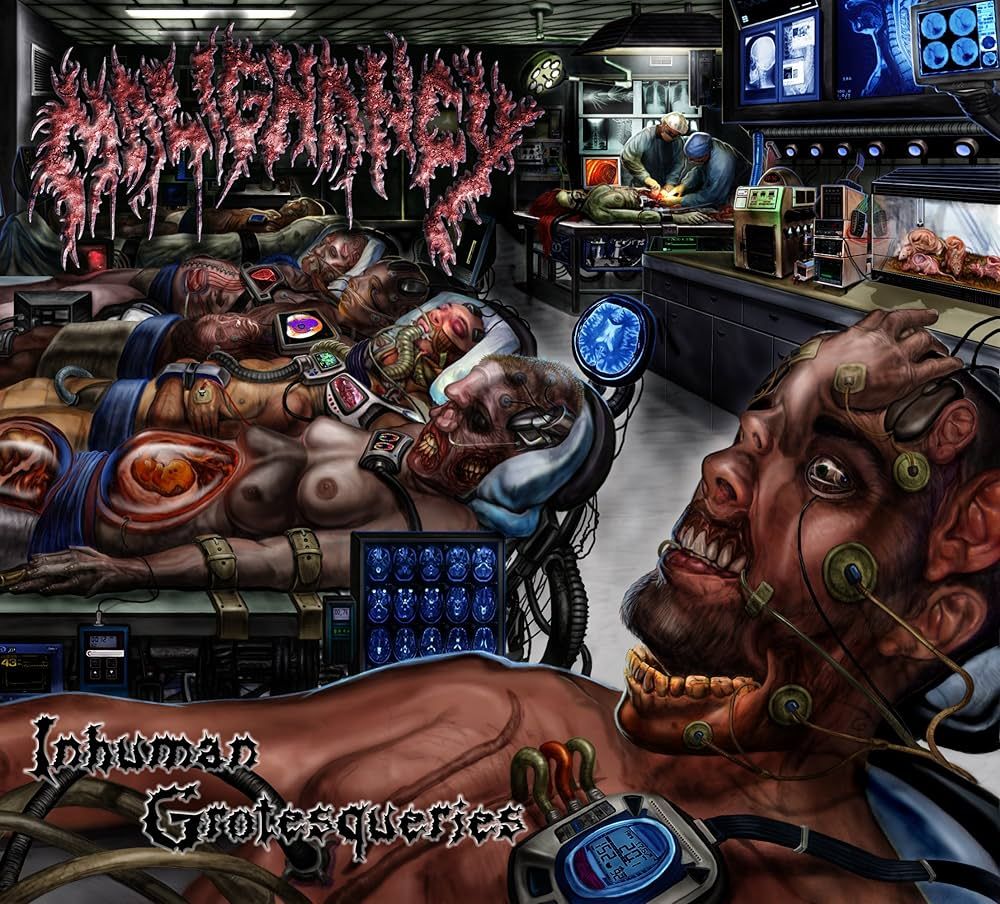
To je zajímavé, protože jsem se právě chtěl zeptat na …Discontinued. Mně osobně přijde přímočařejší než Inhuman Grotesqueries.
Danny: Může to tak znít, ale je to asi naše nejtechničtější
album. Posluchačsky to možná tak nezní, jasně — ale je těžší na hraní i na
psaní. Takže jo, je techničtější.
Pořád je to náročný poslech — ale mně přijde, že ...Discontinued víc inklinuje k thrashi. Co vás tentokrát při psaní ovlivnilo?
Ron: Hele, to byl rok 1980. Mr. Do. Space Invaders. Galaga. Zaxxon.
Fakt? Neděláš si srandu?
Ron: Ne, kámo. Byl jsem dítě, když jsem tohle slyšel. Upřímně — death metal ani moc neposlouchám. Mám rád jazz, blues, rock’n’roll a thrash metal. Moje inspirace nepochází z death metalu. Přichází ze všeho ostatního v mém životě. Videohry pro nás jako děti byly obrovská věc — ColecoVision, Nintendo — a teď slyším herní riffy ve své hudbě. Vychází to přirozeně. A taky — nevím proč — na tomhle albu jsem hodně cítil Dimebaga Darrella. Ani ho vědomě nenapodobuju, ale jeho vliv se prostě projevil.
Rone, ty paříš hry?
Ron: Už ne. Hrál jsem možná dva, tři, čtyři roky — ale teď
už se her ani nedotknu. Přesto to ve mně zůstalo. Slyším to v naší hudbě a
říkám si: „Do prdele, to je riff z Mr.
Do.“ Nepřevzal jsem ho, ale mám ho v DNA. (zazpívá melodii) A ten groove…
Chci groove jako u deathmetalových kapel z devadesátek. Nemůže to být technické
pořád — potřebuješ pauzy, dynamiku. Aby to znělo větší, musíš to vystavět. Do
tohohle alba jsem dal všechno.
Každý riff Malignancy je v podstatě sólo. Pro nás je to jako free jazz. Acid jazz. Mohl bych napsat skladbu za 30 sekund nebo 2 minuty a zněla by jako nová píseň Malignancy. Nemusím nad každým detailem dlouze přemýšlet — jde to samo. Tak píšu death metal. Když jamuju, vzniká to 1–2–3. Pak to jen doladíme. Daniel řekne: „To je moc teplý,“ což znamená, že to není dost brutální nebo zní moc vesele.
Používáš marihuanu jako zdroj inspirace při
skládání?
Ron: Jo. Hulím trávu ke
snídani, obědu i večeři. Říkám tomu údržba. Jako když musíš do auta natankovat
benzín, aby jelo — já musím hulit, abych se vůbec najedl nebo si zavázal
tkaničky. Hulím od rána až do večera. Možná tak sedm gramů denně. Hulím víc než
kdokoliv jiný, kromě Boha nebo Krista z Jersey.
Já to slyším přímo v tý hudbě.
Danny: Jo. Protože je to
organický, divný a jako kdyby přemýšlel mimo rámec toho, jak uvažujou normální
lidi. Takhle vlastně vznikla spousta starých Malignancy – on a Roger se sešli,
hulili, byli sjetí jak draci, a já dole v baráku chytal sekundární rauš. A pak
z nich prostě začalo lézt tohle šílenství. Bylo to něco, co jsem nikdy předtím
neslyšel. Takže pokračujme, protože přesně tohle jsem vždycky chtěl.
Náhlé změny rytmu a tempa.
Danny: A prostě divný riffy.
 Tvoje texty jsou pořád zakořeněné v
postapokalyptických tématech — dystopie, mutanti, genetické inženýrství atd. Co
tě k tomu tématu přitahuje? Nebo je to spíš satira, přehánění?
Tvoje texty jsou pořád zakořeněné v
postapokalyptických tématech — dystopie, mutanti, genetické inženýrství atd. Co
tě k tomu tématu přitahuje? Nebo je to spíš satira, přehánění?
Danny: Hele, všechno je
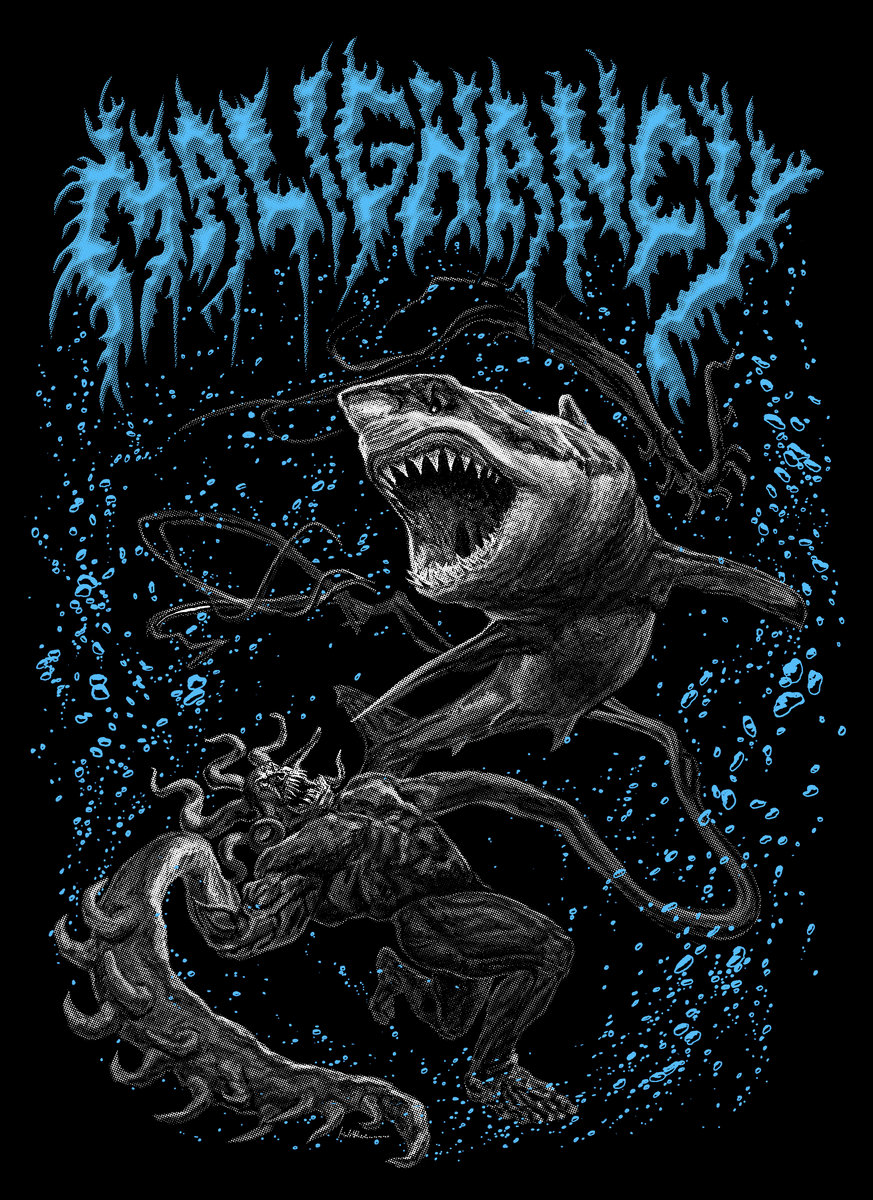
přehánění. Vezmu nějaký nápad a prostě ho rozvedu. Třeba Intrauterine
Cannibalism – to je něco, co se děje u žraloků. Já to přenesl na lidi. Vždycky
jsem to tak dělal. Vezmu něco vědeckýho ze zvířecí říše a přenesu to na člověka,
protože mi to zní hustě. A prostě mě to zajímá.
Ale co se týče novýho materiálu – dotýkám se témat jako...
víš co – žijeme na sociálních sítích a v totální debilitě, v nějaký falešný
matrixový bublině plný stupidity. Pro mě to není satira – já ty věci prostě
vidím a říkám si, možná se to fakt stane. Snažím se koukat trochu dopředu.
Možná budeme geneticky upravení, možná budeme mít na sobě připojený různý sračky,
protože to už tu dávno je – jen o tom ještě nevíme, víš? Uvidíme, co se stane.
Snažím se prostě koukat do budoucnosti. Ale nevím, o čem
budu psát na další desce. Možná o toaletním papíru – fakt netuším.
Já každopádně nechci být mutant, chápeš?
Danny: Nikdo nechce. Ale už
mutanti jsme. Fakt, už jsme.
Dobře, co dál — produkce Eugenics a
poslední desky. Obě znějí podle mě dost uměle – možná kvůli
výškám. Není to úplně brutální zvuk, víš, jak to myslím? Jste s produkcí
spokojení? Mix a mastering dělal Lasse Lammert, německý producent. Je známý
díky metalovým deskám, což mě překvapilo. Jak jste se k němu dostali?
Ron: Mike Heller hraje na
bicí asi na tisícovce alb. A Lasse ty desky obvykle produkuje. Mike s ním dělal
tolikrát, že nám rovnou řekl: „Musíte jít za ním.“ On umí udělat bicí –
a Mike žádný bicí nesampluje. Na týhle desce nejsou žádný samply. Všechno je
přírodní. Slyšíš práci produkčního mistra, kterej nás nechal znít jako… Řekl
mi: „Chceš znít jako špinavý devadesátky? Nebo jako ultra přesnej brutal
deathcore z další dekády?“ Tak k tomu přistupoval. A já chtěl, aby
moje kytara zněla velkolepě. Nechci znít staře. Chci držet krok. Ten zvuk –
miluju ten stereofonní feeling.
Když můžeš udělat zvuk mojí kytary – nikdy jsem nechtěl,
aby zněla jako kytara. Vždycky jsem chtěl, aby zněla jako klávesy, abychom se
odlišili. A proto taky hraju tolik harmonických tónů. A Lasse to z ní vytáhl.
Nechal mě nahrát celou desku dvakrát. Řekl mi, že to zvládnu líp. Nikdo na
světě mi nikdy neřekl, že to můžu udělat líp. Nikdo. On mi řekl: „Musíš
to udělat takhle.“ Dohnal mě k výkonu. Je to jedinej producent nebo
zvukař/mix/master týpek, co tohle kdy udělal. A já ho za to miluju. Miluju tu
produkci víc než na kterýmkoli našem albu. To je můj názor.
Jsou lidi, co řeknou: „Tohle není death metal, chci to slyšet celý
rozjebaný.“ To ale není můj vkus. To je pro lidi, co vyrůstali jen na
death metalu a nic jinýho neposlouchaj. Já vyrostl jinak. Chci slyšet Milese
Davise. Chci slyšet zasraný King Crimson nebo Rush. Chci slyšet dobrou
produkci. Poslouchám tolik různý hudby, kde produkce naprosto drtí ten váš
metal. Tak jsem si řekl - ne, musím jít za tímhle chlápkem.
Lasse má doma platinový desky za produkci. A on si vůbec chtěl s náma něco začít – i když tím riskoval svoje jméno kvůli nějaký malý posraný kapele z Yonkers. Ale on to chtěl zkusit. A pak nás dokopal k výkonu. Miluju to. Takže takhle to je.
Není ten zvuk na Malignancy moc vyčištěnej?
Danny: Nemyslím, že je
vyčištěnej. Myslím, že se prostě změnil styl psaní. Je tam spousta faktorů.
Není to jen jedna věc. Jak říkal Ron – styl psaní, produkce, přístup, riffy –
všechno. Dokonce i můj vokální přístup je na nový desce jinej. Tentokrát se
dají i některý slova rozumět, ne jako dřív, kdy nešlo rozumět vůbec ničemu.
Předtím, než jsme šli do studia, jsme chtěli, aby ta deska prostě zněla líp než
všechno ostatní. Tak přistupujeme ke každý desce.
Chcete se posouvat dál...
Danny: Eugenics zněla líp, protože jsme chtěli, aby zněla líp. Snažili jsme se. Nevím, jestli jsme uspěli, ale myslím, že jo. A tahle deska to prostě úplně rozsekala. Mezitím jsme zkoušeli různý věci — jako Malignant Future, hledali jsme směr. A Epilogue – to taky podle mě vyšlo skvěle. Všechno je to krok v evoluci. Celá kapela je o vývoji. Posouváme zvuk do bodu, kdy už nebude kam se vyvíjet.
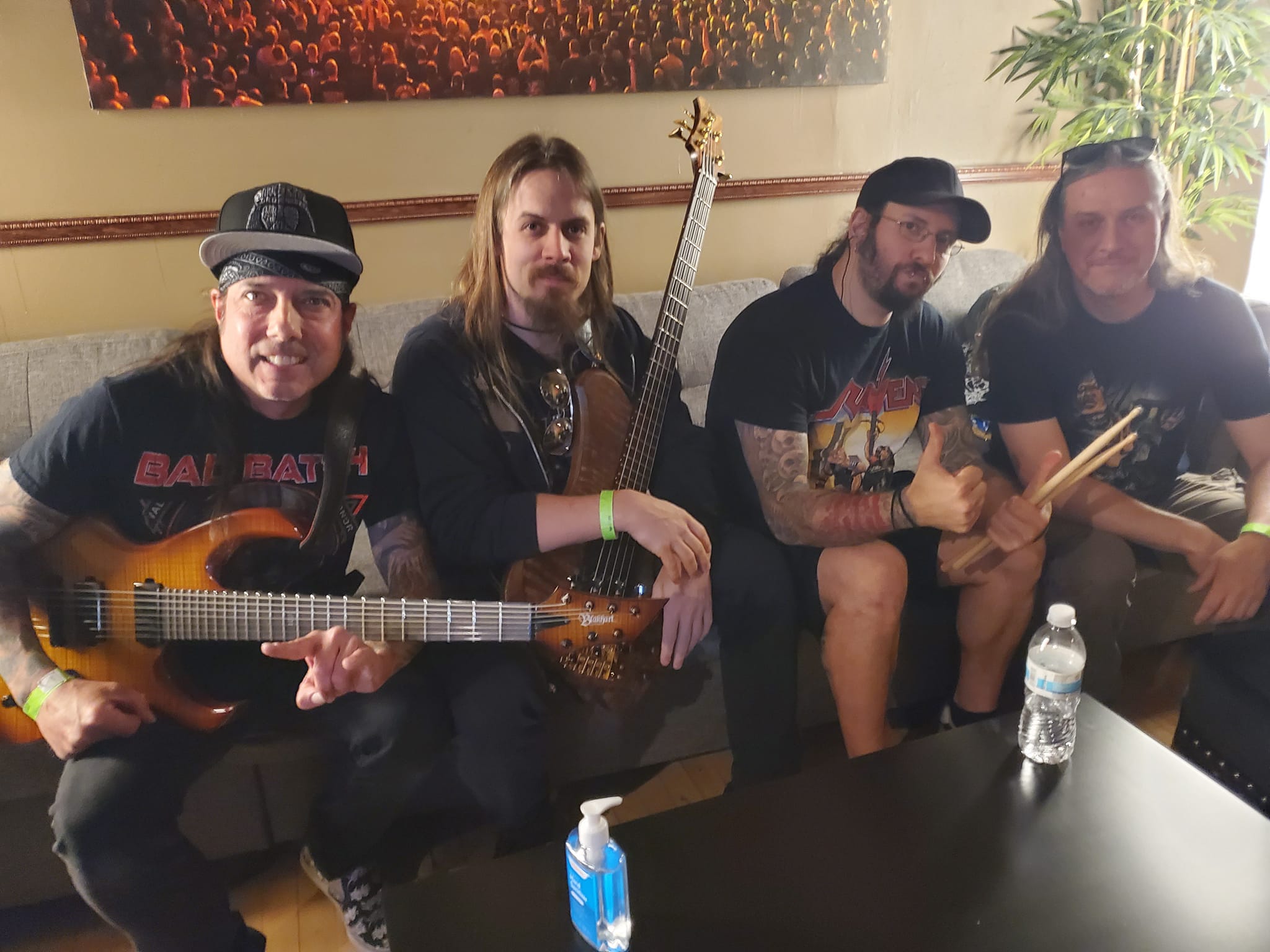 Progress or die. Něco takovýho.
Danny: Když se nemůžeme posunout pozitivně –
nebo aspoň tak, aby to znělo líp, nebo přitáhlo víc fanoušků – tak k čemu to
vlastně je?
Basu na posledním albu nahrál Jacob Schmidt z Defeated Sanity. Jak jste ho získali a jak spolupráce probíhala? Proč právě on?
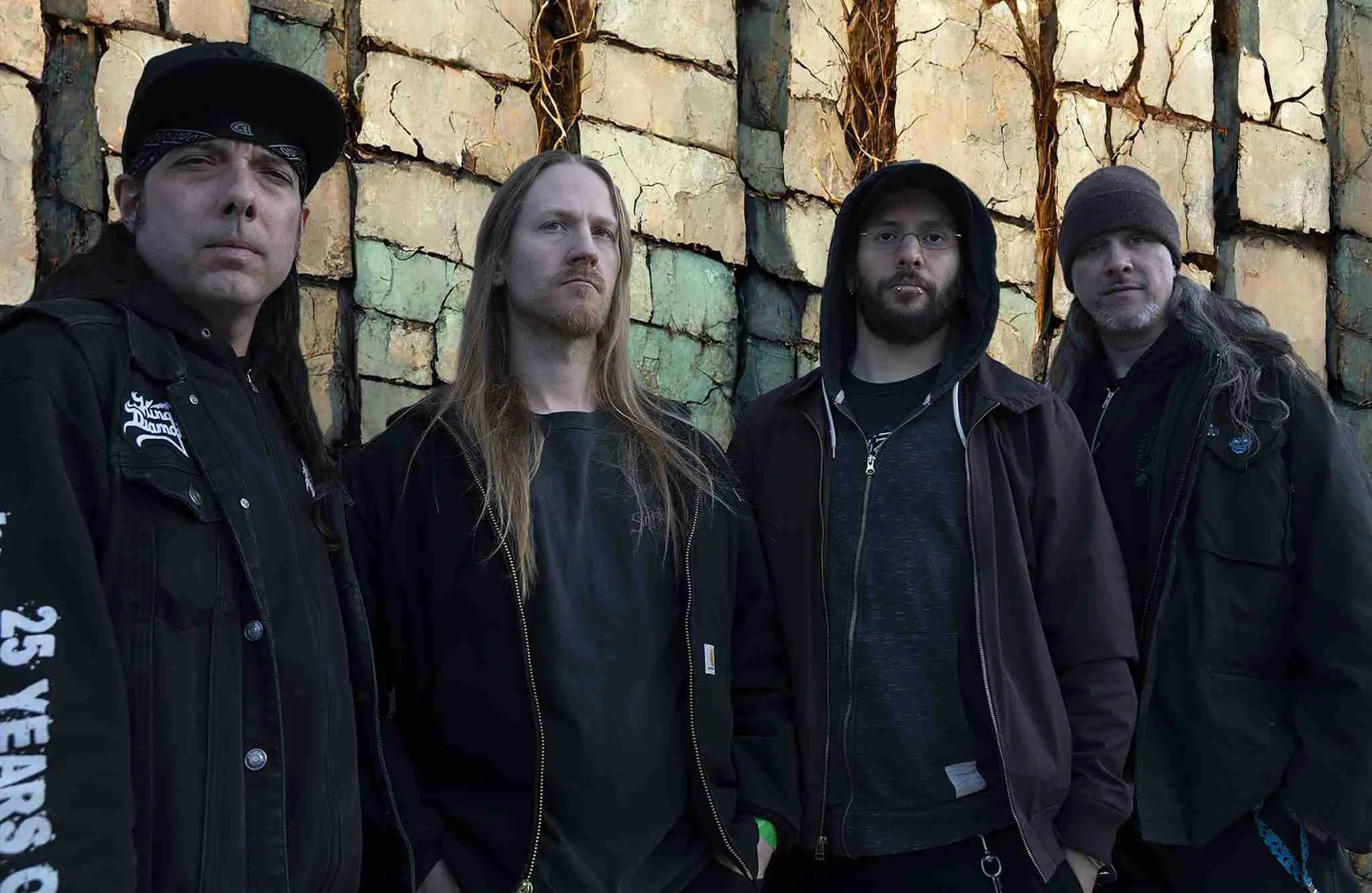
Ron: Je to náš kamarád už dlouho. S Defeated Sanity se známe od chvíle, kdy poprvé přijeli do Ameriky. Přivezli jsme je sem — nic jsme za to nedostali, ale hráli s námi a od té doby jsme jako bráchové. Když udeřil covid, byli jsme všichni bez práce a Jacob potřeboval nějaké peníze. V té době jsem ještě neznal Alexe — kdybych ho znal, možná by byl na desce on.
Alex: Myslím, že Jacob už měl své party nahrané, když jsem se ke kapele přidal. Nahrávalo se přibližně ve stejnou dobu jako The Sanguinary Impetus ve studiu u Mikea v L.A., a protože Monte (náš bývalý basák) odešel a Jacob už tam byl, dávalo to smysl. Je to skvělý hráč.
Ron: A měl na téhle desce svobodu — ne tak jako v Defeated Sanity, kde to musí zapadat do Lilleho vize. Tady mohl opravdu prozkoumat svůj zvuk a styl způsobem, jaký si možná jinde dovolit nemůže. Co vymyslel, posunulo album o level výš.
Alex: Jo, přidal úplně novou vrstvu.
Ron: Basu vlastně nahrál ještě předtím, než jsem dodělal finální kytary. Pracoval jsem tehdy jen s demy, a když jsem slyšel jeho linky, říkal jsem si: „Sakra, to je teď úplně jiná deska.“ Donutilo mě to být lepší. Je to úžasný muzikant a celé to vzniklo na základě přátelství — a on to totálně rozsekal.
 Jste
na scéně už přes 30 let, ale vydali jste jen čtyři dlouhohrající alba…
Jste
na scéně už přes 30 let, ale vydali jste jen čtyři dlouhohrající alba…
Danny: Počkej — nejdřív se tě na něco zeptám já. Proč se
nepočítají EPčka? Jsou tam přece nové skladby.
Myslel jsem jen klasická alba, víš jak.
Danny: Jasně, chápu, ale většina médií EPčka prostě ignoruje. Přitom některá z nich jsou naprosto skvělá.
Ron: Já pocházím z hardcore scény. Miluju sedmipalce — na alba kašlu.
OK, zapomeňme na počet alb — o to mi nešlo. Spíš jsem chtěl říct, že nejste zrovna nejplodnější kapela. Trvá to dlouho tvořit tak komplexní hudbu, nebo prostě necítíte potřebu spěchat?
Danny: Je to kvalita nad
kvantitou. Tolik kapel vydává desku každý rok — a každý rok je to slabota. Jaký
to má smysl?
Hudba není naše povolání. Pro něj (ukazuje na Alexe) jo, a Mike se jí věnuje
naplno taky, ale my ostatní ne. Děláme, co můžeme, když to jde. Je to víc než
koníček, ale není to ani práce. Lidi se mě pořád ptají — proč máte jen čtyři
alba?
Možná máme jen čtyři, ale podle mě rozdupou osm alb od spousty jiných kapel.
Většina z nich je plná vaty, protože mají podepsanou smlouvu a musejí něco
dodat podle plánu. To není hudba, to je obsah.
Hudba by nikdy neměla být značka. Měla by vycházet odsud (ukazuje na srdce).
Nemělo by to být: „Tak jo, jsme ve studiu, jedem… džin džin džin džin — hotovo,
skladba.“
Ne. To není skladba. To je sračka. Pak k tomu hodí nějaké ubohé sólo, udělají
to desetkrát a říkají tomu album. To v týhle scéně nepotřebujeme.
A nejhorší je, že to mladý žerou, protože neznají underground. Ale jakmile ho
jednou objeví, většinou se už k mainstreamu nevrátí. Já taky ne. Když jsem
poprvé slyšel underground, došlo mi, kolik promyšlenosti a techniky v tom je.
Vezmi si třeba Metallicu
— maximálně tři riffy. To je všechno. A jen to opakujou a lehce upravujou. Sami
se tím uzamkli. Ale pak přišly kapely jako Vio-lence
a Forbidden
a změnily pravidla hry — měly třeba deset riffů v jedné skladbě a natrhly Metallice prdel.
Když jsi slavný, už nebojuješ. Držíš si svůj směr, maximálně přidáš nějakou
pitomost, aby to jako oživila, ale jinak je to pořád to samé. Už nejde o hudbu,
ale o značku.
Ron: Je to jak u Necrophagist — Muhammad napsal dvě alba a
demo, a stejně tím pořád rozdrtí ty dnešní kluky, co se snaží být „tech“.
Nemusel mít 16 alb. A taky to nebyla jeho kariéra — teď je inženýrem u BMW nebo
co.
U nás je to stejné. Život jde dál. Nájem u nás je třeba 2000 dolarů měsíčně. To
z jednoho
koncertu nezaplatíš. Někdy dostaneme dva nebo tři tisíce, ale to není stálý
příjem.
Danny: Všichni máme normální práci. A jsme taky fanoušci — nejsme žádná elita. Jen náhodou píšeme technický blbosti.
Takže
nejste jako Cannibal Corpse, kteří vydávají album každé dva roky.
Danny: Přesně. A upřímně —
jejich desky zní všechny stejně. První čtyři nebo pět bylo super, ale pak už je
to jen variace na to samé. Každá deska má možná jednu nebo dvě dobré skladby,
takže kdybys vzal jen ty nejlepší z posledních 15 let, vyšlo by ti jedno skvělé
album.
Jaké máte plány do budoucna? Budeme zase čekat deset let na další album?
Ron: Tentokrát ne. Teď jsme pod smlouvou, takže maximálně
pět let. Willowtip je k nám férový — netlačí na nás, ale už jsme začali psát.
Mám hotovou jednu skladbu. Teď už se jen musíme spojit s Mikem a dodělat to.
Taky teď jdu z běžné práce do důchodu. Na 24 měsíců se budu věnovat hudbě
naplno — se svými dvěma kapelami. Hrajeme často.
Teď hrajete s mladým a talentovaným bubeníkem Nikhilem Talwalkarem. Jak k tomu došlo?
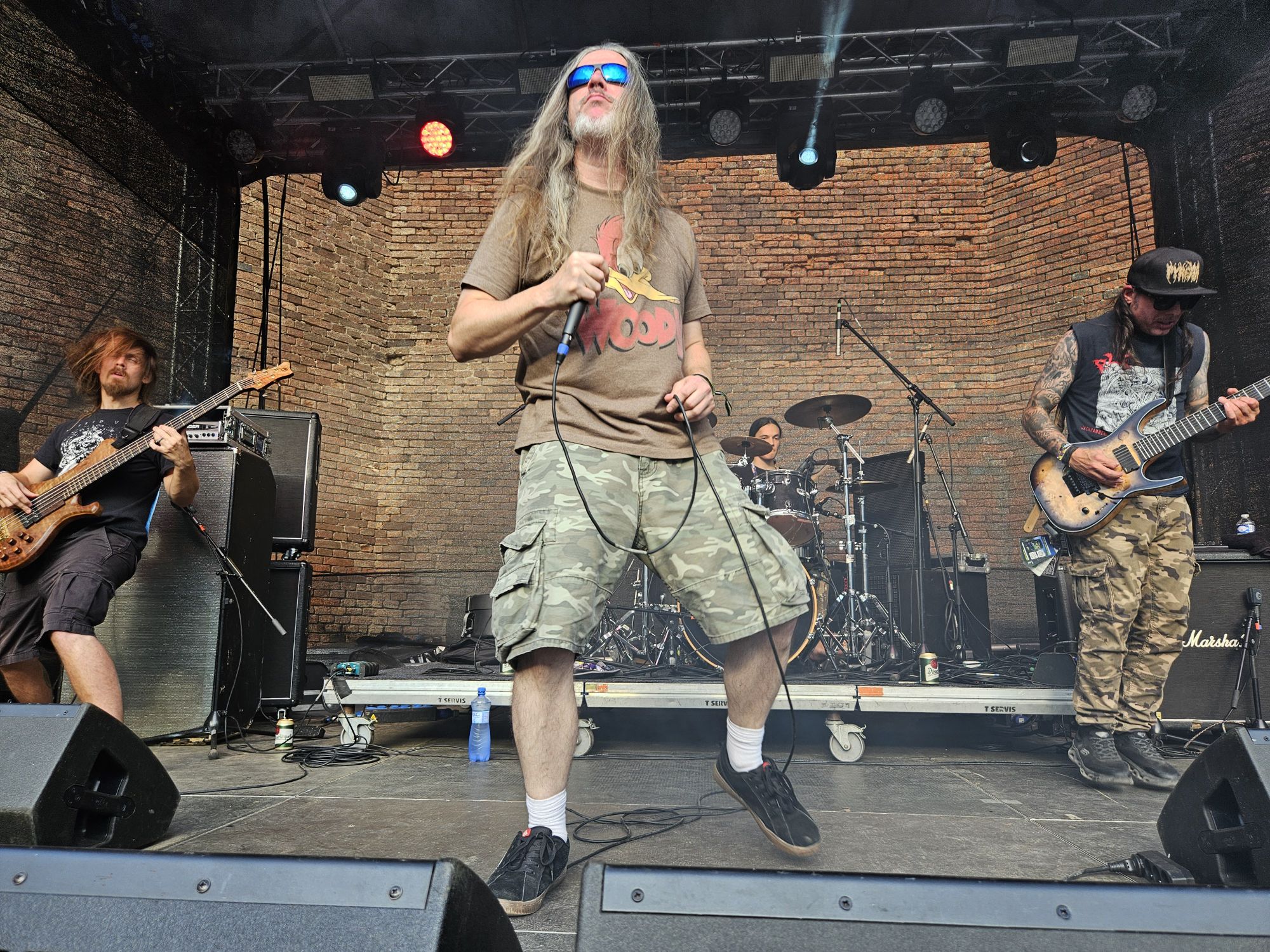
Ron: Našli jsme ho na YouTube. Náš koncertní bubeník Alex
Cohen měl nádor na mozku, ale už předtím říkal, že se chce víc věnovat učení, a
doporučil Nikhila jako možného náhradníka.
V té době jsme o něm neslyšeli, ale podíval jsem se na něj — a Nikhil umí
všechno. Umí zpívat jako Malignancy, hrát na kytaru, basu i bicí jako my. Říkal
jsem si: „Jestli tenhle kluk zvládne
všechno tohle, může být kýmkoliv z nás.“
Chtěl to dělat, byl do toho zapálený a zapadl. Má svoje vlastní projekty — Anal Stabwound a
asi milion dalších — ale hraní s námi ho baví a nás baví on.
Řekl jsem mu, protože vím, co se stane, když jsi tak mladý a tak dobrý: každý
tě chce. Taky jsem byl ten kluk. V šestnácti mě chtěl každej. Tak jsem mu řekl:
„Vyber si projekty chytře. Nelez do nějaký velký kapely jen kvůli
výplatě a pak nehraješ ani hudbu, co tě baví. Zachovej si kreativitu a dělej si
svoje věci.“
Taky jsem mu řekl: „Zůstaň
na vejšce. Získej titul.
Vydělávej si jinak. Hudbu si nech jako vášeň — budeš šťastnější.“ A on je
chytrý, myslím, že to přesně tak dělá.
Kdyby někdo v Suffocation
nebo Cannibal
Corpse vypadl, hned mu zavolají. Všichni to vědí. Ale on na to má dost
rozumu.
 Danny: Je to takovej
staromódní kluk s devadesátkovým mindsetem. Thrash ho moc nebere, ale spíš
proto, že ho zatím moc neslyšel. Tak mu ho postupně pouštím.
Danny: Je to takovej
staromódní kluk s devadesátkovým mindsetem. Thrash ho moc nebere, ale spíš
proto, že ho zatím moc neslyšel. Tak mu ho postupně pouštím.
Ron: Poslouchá třeba šedesátkový Genesis!
Danny: Jo — miluje techniku. To je jeho věc. Baví ho rozebírat věci do detailu. Funguje to skvěle.
Ron: Mimochodem, chystám s ním boční projekt. Jmenuje se Placenta Garden, je to grindcore, který chci udělat už
roky. Nikhil tam bude — buď na bicí, nebo na kytaru. Danny bude zpívat a Nikhil
bude druhý vokalista — chci ten styl se dvěma vokály, jaký měli třeba Insect
Warfare.
Máš na sobě tričko P.L.F.…
Ron: To je moje nejoblíbenější grindcore kapela. Dave a Brian — Brian byl jeden z mých nejoblíbenějších bubeníků vůbec. Ty kluky miluju. Není to jen hudba — je to pocit. Je to víc než jen super rychlej thrash, a to mám radši než death metal. (směje se)
 ENGLISH VERSION
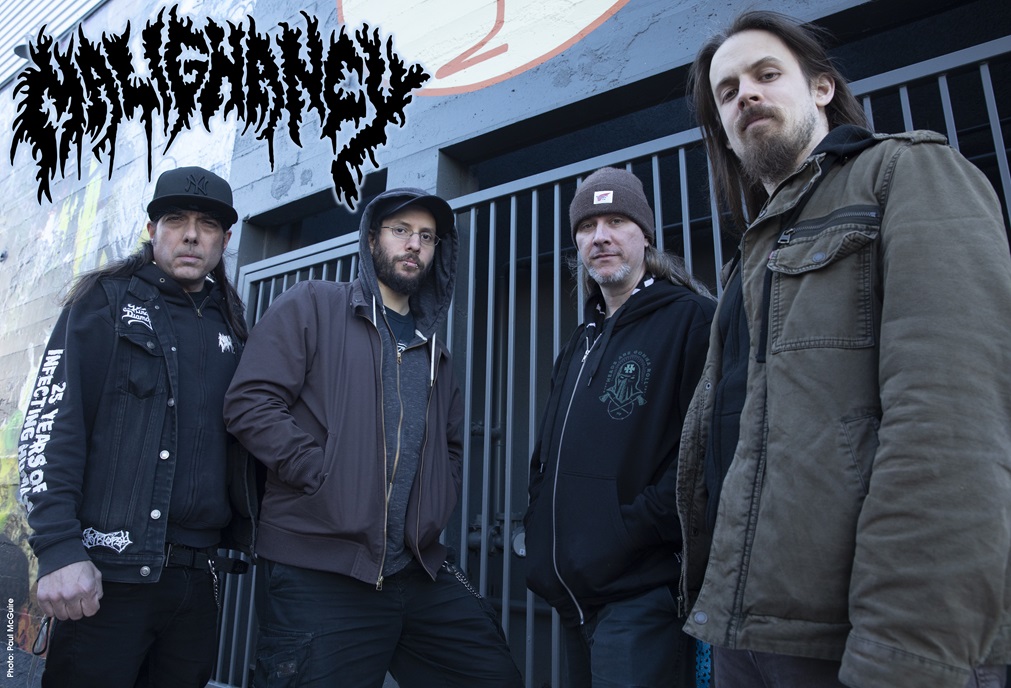
MALIGNANCY: It's better to have four really good records than eight albums full of filler
I met my
favorites, Malignancy, a couple of years ago in northern Bohemia. It was a nice
meeting, even though their show at Death Coffee wasn’t anything special. Then,
after years of waiting, their new record finally dropped—and shortly after,
they were announced for Brutal Assault festival. No questions asked. There was
a lot to talk about, the guys are chatty, and we didn’t even manage to cover
everything.
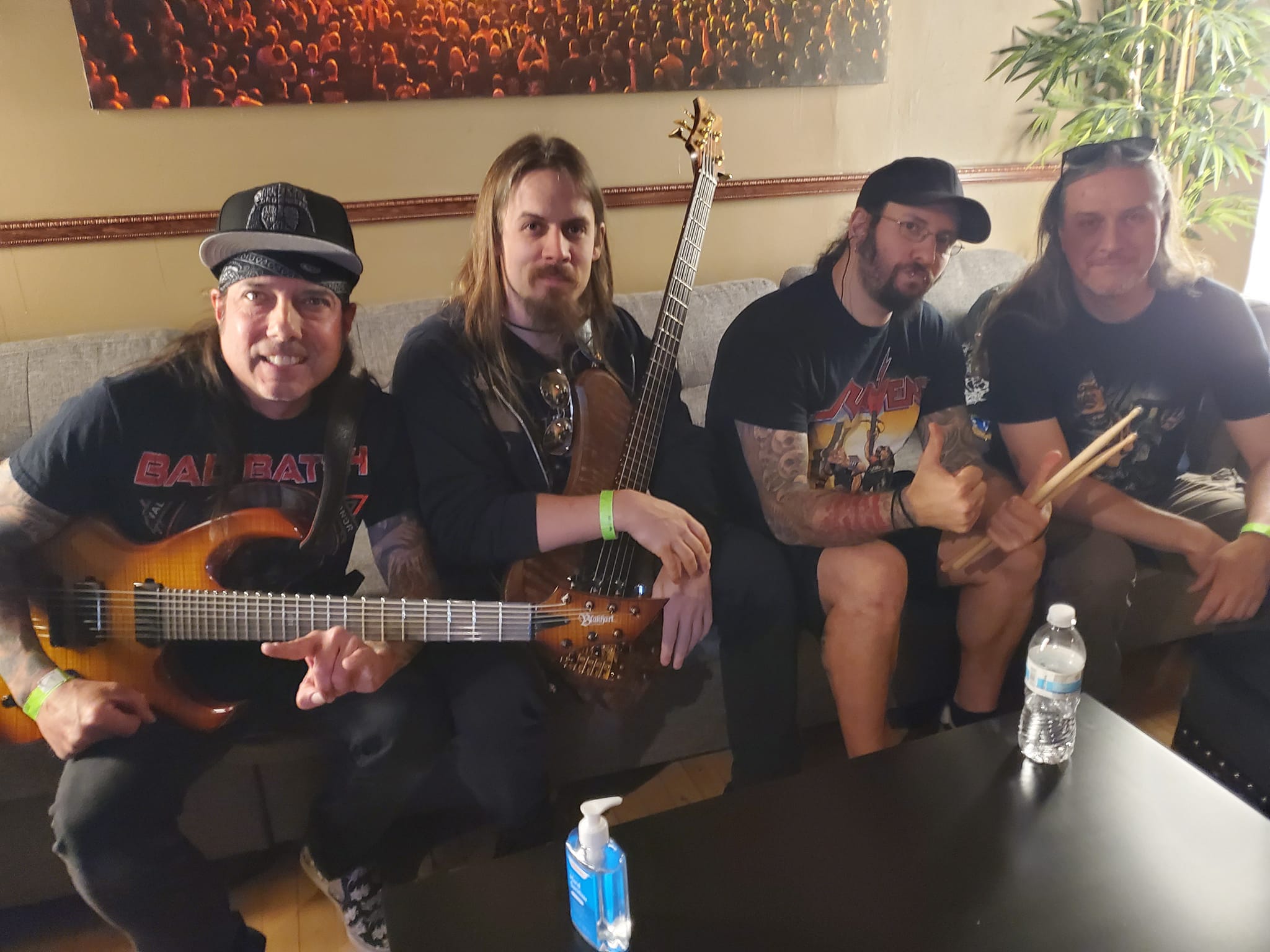
We last saw each other two years ago in Litoměřice. Back then, you told me you had an album recorded for six years, just waiting to be released. In the end, you made it - …Discontinued came out last year on Willowtip. Why did it take so long?
Danny
Nelson: Well, it
took so long because we had the material written, and then Mike moved to
California to join Fear Factory. Things just didn’t line up — it was written,
but not solid. Ron had all the riffs ready, but I hadn’t written any lyrics yet,
because I usually wait until the songs are fully done. Mike was always on tour
and couldn’t contribute much. Once he finally recorded the drums, Ron finished
his parts… and then I took my sweet time. And then the pandemic hit.
Ironically, this was the fastest record ever written for
Malignancy — and then it just sat on a shelf for five years.
Ron
Kachnic: We
wrote it in, like, a few months.
DN: Yeah, it was quick.
So you basically took a break?
DN: Kind of. Mike was on tour, so he
couldn’t record anything. And by the time he did, he had forgotten how to play
it! I hadn’t written any lyrics, so suddenly everyone was done and I was like: “Oh… I guess I have to start writing now?”
That took me another couple of months.
RK: Let me explain something to everybody
out there. The riffs I write — they don’t even have proper notation. I do stuff
that’s not even written yet. Lots of noises, pull-offs… I might hit 3 or 4
notes on every fret. I can make harmonics jump to a certain note, but I can’t
tab it properly. Only parts of it. So if I can’t write it perfectly, I’d rather not write it at all. Everything comes
from muscle memory. I listen back and figure it out again.
Nice. So you were all just waiting for Mike Heller…?
DN: It was a collective thing. We were playing gigs the whole time. We weren’t just sitting around.
And
there was no pressure from Willowtip?
DN: No. We talked to them in advance. Told them we had a record written. And they were like: „Cool. Whenever you record it.”
Are
you happy with Willowtip Records?
DN: Yeah, this record’s been excellent. They’ve helped us a lot. Every time I reach out, they respond right away. So it’s been a good experience.
What
kind of feedback have you received on …Discontinued?
DN: All terrible. Everyone hated it. I
contemplated suicide for a while… (laughs)
No, it’s actually been really good. The production and playing are excellent.
It’s the best-sounding record we’ve ever done. Period. I’m super psyched — and
the fans are, too.
Alex Weber: From a technical standpoint, I think it’s the gnarliest Malignancy record so far — at least for me. Playing-wise, it’s way harder, more complex, and more involved than the older material.
Really?
AW: Oh yeah. Totally. Technically, it’s a
wild album.
RK: The thing is — when people hear “technical”, they think it means Necrophagist-style fancy riffs, like it has to be flashy. That’s not technical music. Technical music is in the rhythm section — drums, guitar, and bass locked in together. It doesn’t have to sound like a piano solo to be technical.
 Like
Mozart or something.
Like
Mozart or something.
RK: Yeah, exactly. To us, that’s not technical. We want technical drums. Not just blast beats — but intricate parts where every note on the guitar hits exactly at the same time. And the bass fills in the gaps to create ambiance. That’s what technical means to us. It’s a different definition than what people usually think.
That’s
funny, because my next question was going to be about …Discontinued. For me, it sounds more
straightforward than Inhuman Grotesqueries.
DN: It may sound that way, but it’s probably our most technical album. It sounds tech, sure — but this one is harder to play, and harder to write. So yeah, it’s more technical.
It’s
still a demanding listen — but for me, …Discontinued leans more into thrash. What inspired
you during the writing process this time?
RK: So this was, like, 1980. Mr. Do. Space Invaders. Galaga. Zaxxon.
Really?
You’re not kidding?
RK: No, man. I was a kid when I heard that stuff. Honestly, I don’t even like death metal. I like jazz, blues, rock’n’roll, and thrash metal. My influences don’t come from death metal at all. They come from everything else in my life. Video games were huge for us as kids — ColecoVision, Nintendo — and now I hear video game riffs in my songs. It just comes out naturally. Also, on this record — I don’t know why — I was channeling Dimebag Darrell. I don’t even try to imitate him, but something about his influence came out.
 Ron,
are you a gamer?
Ron,
are you a gamer?
RK: Not anymore. I probably played for two, three, four years — but now, I don’t touch games at all. Still, that stuff stuck with me. I hear it in our music and go: “Damn, that’s a Mr. Do riff.” I didn’t steal it, but it’s in my DNA. (sings a melody) And the groove… I want a groove like a ‘90s death metal band. It can’t all be technical all the time — you need breaks, you need dynamics. To make things sound bigger, you’ve got to build them up. I put everything I had into this album.
Every Malignancy riff is basically a solo. To us, it’s like free jazz. Acid jazz. I could make a song in 30 seconds or 2 minutes and you’d think it’s a brand-new Malignancy song. I don’t have to sit and work out every little detail — it comes naturally. That’s how I write death metal. If I’m jamming, I can write stuff 1–2–3. Then we refine it later. Daniel’ll say: “That’s too gay,” meaning not brutal enough or too happy-sounding.
Do you use weed as a source of inspiration when writing?
RK: Yeah. I smoke weed for breakfast, lunch, and dinner. I call it maintenance. Like, you need to put gasoline in your car to run — I need to smoke weed to even eat food, to tie my shoes. So I smoke weed from the morning all the way until I go to bed. Maybe I smoke about seven grams. I smoke more weed than any human, except for God or Christ from Jersey.
I hear it in the music itself.
DN: Yeah. Because it's organic and it's weird, and it's like he's thinking outside of the constructs of what normal people might think. That's how a lot of the old Malignancy was written — because he and Roger would get together, smoke, and be high as a kite. I'd get a contact high just being downstairs with them, and then this shit would just come out of them. And it was just something I had never heard before. So let’s keep going, because that’s what I always wanted.
Abrupt signature changes and tempo changes.
DN: And just weird riffs.
 Your lyrics are still rooted in post-apocalyptic themes —
dystopias, mutants, genetic engineering, etc. What draws you to this kind of
subject matter? Or is it meant more as satire or exaggeration?
Your lyrics are still rooted in post-apocalyptic themes —
dystopias, mutants, genetic engineering, etc. What draws you to this kind of
subject matter? Or is it meant more as satire or exaggeration?
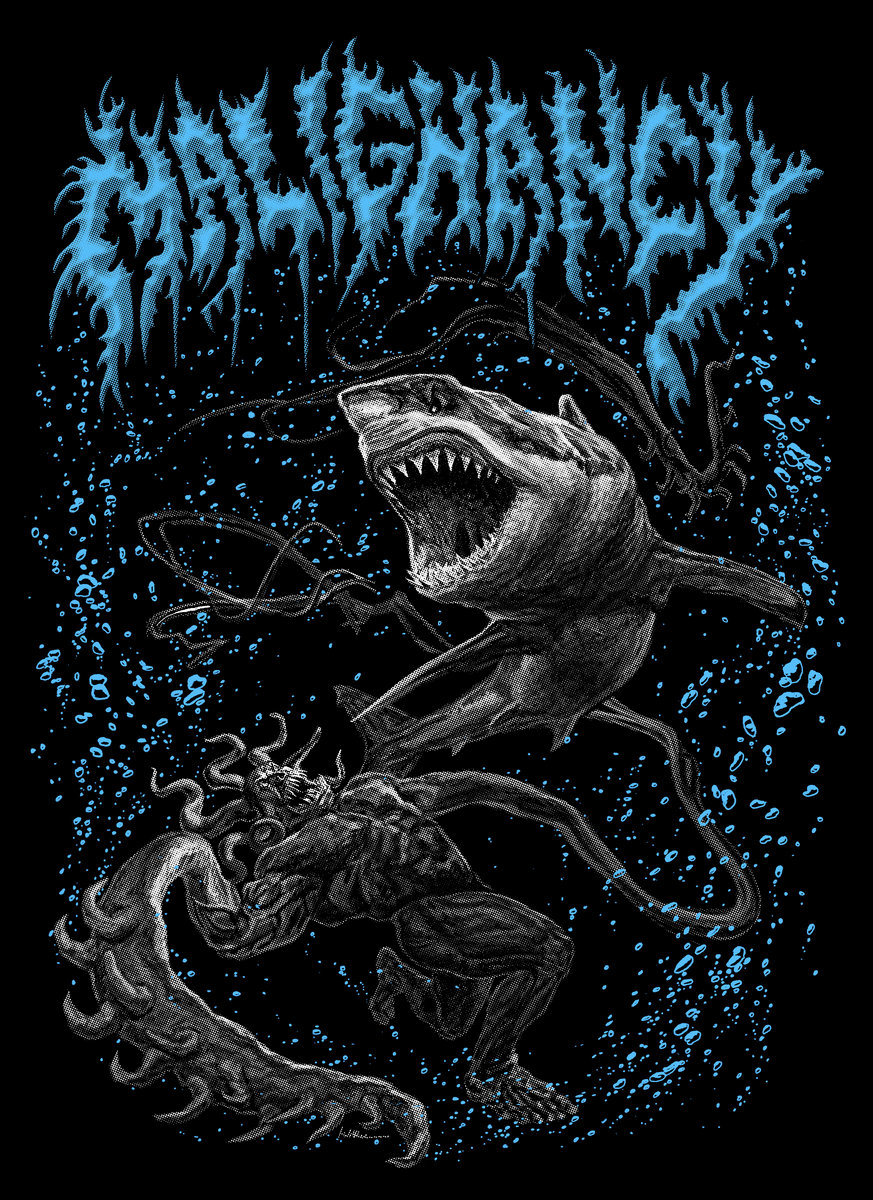
DN: Well, everything’s an exaggeration. I mean, I take an idea and I just expand upon it. Like Intrauterine Cannibalism is something that happens in sharks — I made it happen in humans. I’ve always been doing that. I’ll extrapolate something that’s scientific in the animal kingdom, and I’ll put it in humans just because I think it sounds cool, and it's just interesting.
But as far as the new material, I’m just touching on subjects like, you know — we live in social media and all this idiocy, where we completely live in a fake, Matrix-type bubble of stupidity. It’s not satire for me — I see shit, and I think, maybe this is what might happen. I try to look a little ahead. So maybe we’ll bioengineer ourselves, maybe we’ll have all kinds of shit attached to us, because it’s already here — we just don’t know about it yet, you know? We’ll see what happens.
So I’m trying to look into the future. But I don’t know what I’m going to write about for the next record. I might just write about toilet paper — I don’t know.
Anyway, I don’t want to be a mutant, you know?
DN: Nobody does. We already are mutants. We already are, you know?
Okay. What’s next — production on Eugenics and the latest
album. They both have a rather artificial sound to me — maybe there are a lot
of high frequencies. It’s not exactly brutal in tone, you know what I mean? Are
you happy with the production? The mix and mastering were done by Lasse
Lammert, a German producer. He’s known for heavy metal albums, which surprised
me. How did you end up working with him?
RK: Mike Heller plays drums on probably a thousand albums out there. And Lasse is usually the producer on those albums, and Mike’s worked with him so much that he even told us, We gotta go with him. He makes the drums — because Mike doesn’t sample any drums. There are no samples on this album. It’s all natural. You’re hearing a production master make us sound like… He goes, Do you want to sound like sloppy ’90s? Do you want to sound like ultra fucking tight brutal deathcore from the 2000s? That’s how he approached me.
And I did want my guitar sound to sound big. I didn’t want to sound old. I want to keep up with people. It’s a guitar sound — I love that stereophonic sound. If you could make my guitar sound — I never wanted it to sound like a guitar. I always wanted it to sound like a keyboard, to differentiate ourselves. And that’s why I do a lot of harmonics. And Lasse brought it out. He made me record the album twice. He told me I could do better. There’s no one in the world who ever told me I could do better. No one. He told me I had to do it this way. He pushed me. He’s the only producer or engineer or mix/master guy that ever did that. And so I love him. I love the production on this album over all our albums. That’s me personally.
There are people who say: Oh no, it’s not death metal. I want to hear it all fucked up. That’s not what I like. That’s what maybe people like if they grew up with death metal as the only music they like. I grew up. I want to hear Miles Davis. I want to hear fucking King Crimson or Rush. I want to hear good production. I listen to so much different music where the production blows away fucking metal. I was like — no, I need to go with this guy.
Lasse’s got platinum records in his house for producing. So for him to even do us, to even want to take a chance on us — and maybe risk his name by doing a little shitty band from Yonkers — yeah. But he wanted to do something for us and then pushed us. I love it. So that’s how I’m coming, isn’t it?
Isn’t that sound too polished for Malignancy?
DN: I don’t think it sounds polished, no. I think it’s just that the writing style is different. It’s a lot of things. It’s not just one thing. Like he said — the writing style, the production, the approach, the riffs — everything. Even my vocal approach on the new record is different. You can actually understand some words, instead of not understanding any. Before we went in, we wanted this album to just sound better than everything. That’s how we go into every record.
You want to progress...
DN: Eugenics sounded better because we wanted it to sound better. We tried. I don’t know if we succeeded, but I think we did. And then this one just blew it out of the water. We had some things in between. We were still testing — like Malignant Future, trying to figure it out. And Epilogue — those came out great too, to me. It’s all a step in an evolution. That’s what the whole band is. It’s just evolving our sound to the point where we can’t evolve anymore.
 Progress or die. Something like that.
DN: If we can’t
progress in a positive way — or in a way that’ll make us, I don’t know, get
more fans or just sound better — then what’s the point?
The bass on the latest album was recorded by Jacob Schmidt from Defeated Sanity. How did you get him on board, and what was the collaboration like? Why him, specifically?
RK: He's been a personal friend of the band for years. We’ve been friends with Defeated Sanity since they first came to America. We brought them over — we didn’t get paid or anything, but they played with us, and we’ve been tight ever since. It’s like a brotherhood. When covid hit, we were all out of work and Jacob needed to make some money. I didn’t know Alex at the time — if I had, he probably would’ve been on the record.
AW: I think Jacob had already recorded his parts by the time I joined. They recorded around the same time as Sanguinary Impetus at Mike’s studio in L.A., and since Monte (our last bassist) had left, and Jacob was already there, it just made sense. He’s an awesome player.
RK: And he had freedom on this record — not quite the same as in Defeated Sanity, where it has to fit Lille's vision. Here, he really got to explore his bass tone and style in a way he maybe can’t elsewhere. The stuff he came up with took the album to another level.
AW: Yeah, it added a whole new layer.
RK: He actually recorded the bass before I even did my final tracks. I was working from scratch guitars and when I heard his basslines, I was like: Jesus, this is a different album now. It pushed me to do better. He's an amazing musician and it was a friendship thing, plain and simple — and he killed it.
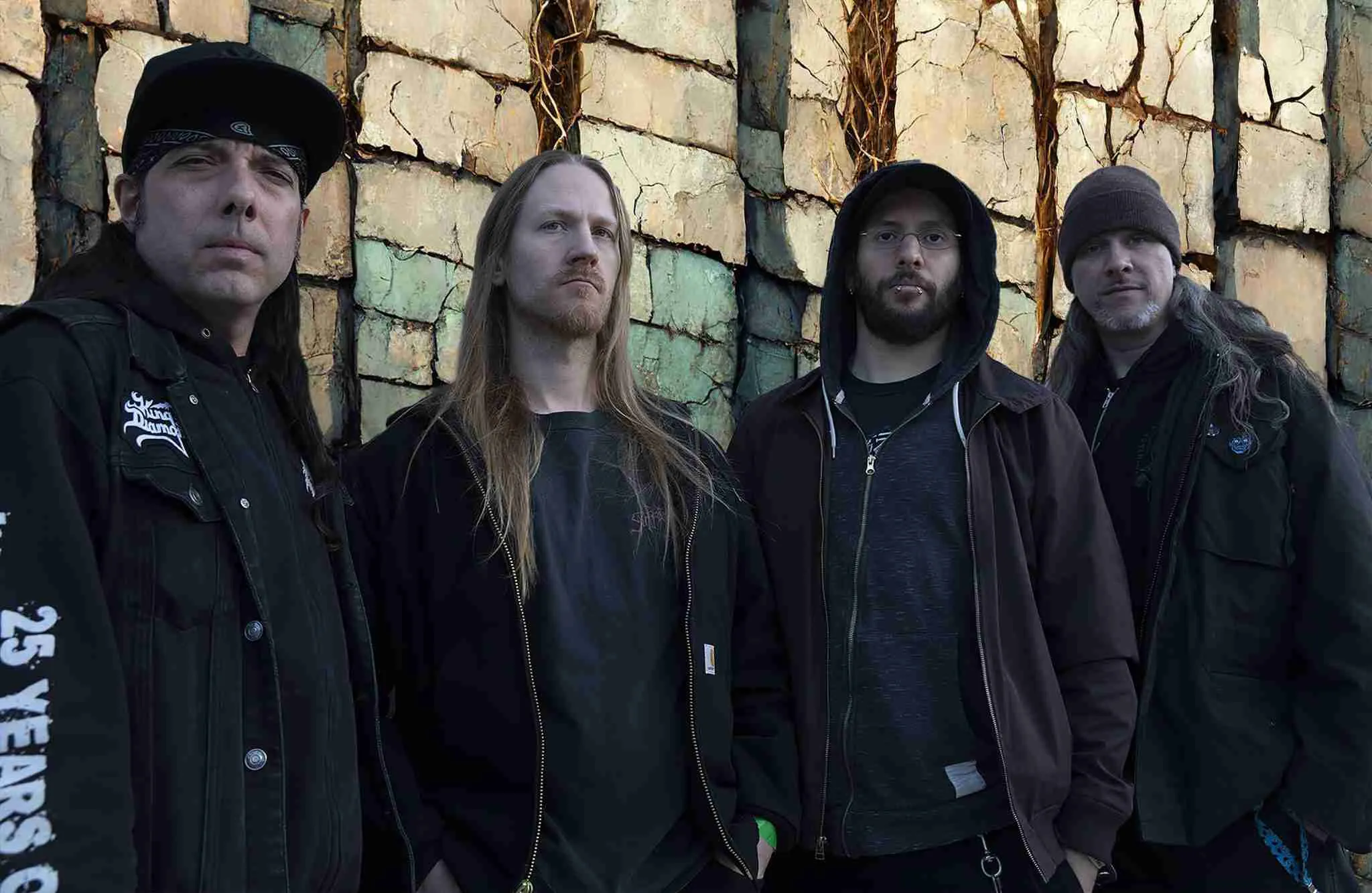 You’ve
been around for over 30 years, yet you’ve only released four full-length
albums…
You’ve
been around for over 30 years, yet you’ve only released four full-length
albums…
DN: Wait
— let me ask you something first. Why don’t EPs count as releases? They’re new
songs.
I was just referring to full-lengths, you know.
DN: I get it, but most media just ignores EPs. Some of them are amazing releases.
RK: I come from a hardcore background. I love 7-inches — I don’t give a shit about albums. Give me a 7-inch any day.
OK, forget the number of full-lengths — that wasn’t really the point. I just meant you’re not the most prolific band. Does it take that long to craft music in such a complex style, or do you just not feel the need to rush?
DN: It’s
quality over quantity. So many bands put out a record every year and every year
it sucks. What’s the point?
Life happens. Music isn’t our career. It is for him (points to Alex), and Mike
does it full-time too, but the rest of us don’t. We do what we can, when we
can. It’s more than a hobby, but it’s not a job either. I get asked that all
the time — Why only four albums?
Well, maybe we only have four, but I’d argue they crush the eight albums a lot
of other bands have put out. Most of theirs are filled with filler, because
they’re under contract and have to deliver something on a schedule. That’s not
music, that’s content.
Music should never be a brand. It should come from here (points to heart). It
shouldn’t be, “Alright, we’re in the studio, let’s go… jin
jin jin jin — that’s a song.”
No. That’s not a song. That’s shit. Then they throw a crappy lead over it,
do that ten times and call it an album. We don’t need that in this scene.
The worst
part is, kids eat it up because they don’t know underground music. But once
they hear it, they usually don’t go back to the commercial stuff. I didn’t.
When I first heard underground, I realized how much thought and technique went
into it.
Take Metallica, just for example — three riffs max. That’s it. And they just
repeat and tweak. They boxed themselves into that. But bands like Vio-lence and
Forbidden came along and changed the game — they had like ten riffs in every
song and were wiping the floor with Metallica.
But when you’re famous, you don’t fight anymore. You stay in your lane, maybe
add something stupid to mix things up, but mostly it’s the same. It’s about
pushing the brand, not the music.
RK: It’s like Necrophagist — Muhammad
wrote two albums and a demo that still blow away all these kids trying to be
tech today. He didn’t need 16 albums. And that wasn’t his career — now he’s an
engineer at BMW or something.
Same for us. Life happens. Rent where we live is like $2000 a month. We’re not
making that from a single gig. Sometimes we’ll get two or three grand, but it’s
not consistent income.
DN: We all have regular jobs. And we’re fans too, not some elite club. We just happen to write technical stupidity.
So
you’re not like Cannibal Corpse, dropping an album every two years.
DN: Yeah, and honestly — their albums all sound the same. The first four or five were great, but after that it’s just variations of what they’ve already done. Each record might have a good song or two, but if you took just the best songs from the last 15 years, you’d have one amazing album.
What are your future plans? Will we have to wait another ten years for a new album?
RK:
Actually, no. We’re under contract now, so five years max. Willowtip’s been
good to us — no pressure, but we’ve already started writing. I’ve already got
one song done. Now we just have to link up with Mike and finish it.
Also, I’m retiring from my day job. In 24 months, I’m doing music full-time —
between both my bands. We play a lot.
Now you're playing with the young and talented drummer Nikhil Talwalkar. How did that happen?
RK: We
found him on YouTube. Our live drummer Alex Cohen had a brain tumor, but even
before that, he said he wanted to shift toward teaching and recommended Nikhil
as someone who might fill the spot.
At that point, we hadn’t heard of him, but I checked him out — and Nikhil can do everything. He can sing like Malignancy, play guitar,
bass, and drums like us. I was like, If this guy can do all that, he
can be any one of us.
He wanted to do it, he was into it, and he fit. He’s got his own projects —
Anal Stabwound and like million other things — but he loves playing with us,
and we love him.
I just told him, because I know what happens when you’re that young and that
good: everyone wants you. I was that kid once. I had everyone trying to recruit
me when I was 16. So I told him: „Pick
your projects carefully. Don’t just join a big band and end up stuck playing
music you don’t even like just for a paycheck. Keep your creativity and do your
own thing.“
I also told him: „Stay in college.
Get your degree. Make your living with something else. Keep music as your
passion — it’ll make you happier.“ And he’s smart, I think he’s
doing exactly that.
If someone in Suffocation or Cannibal drops out, he’ll get the call. Everyone
sees it. But he’s mature enough to handle it.
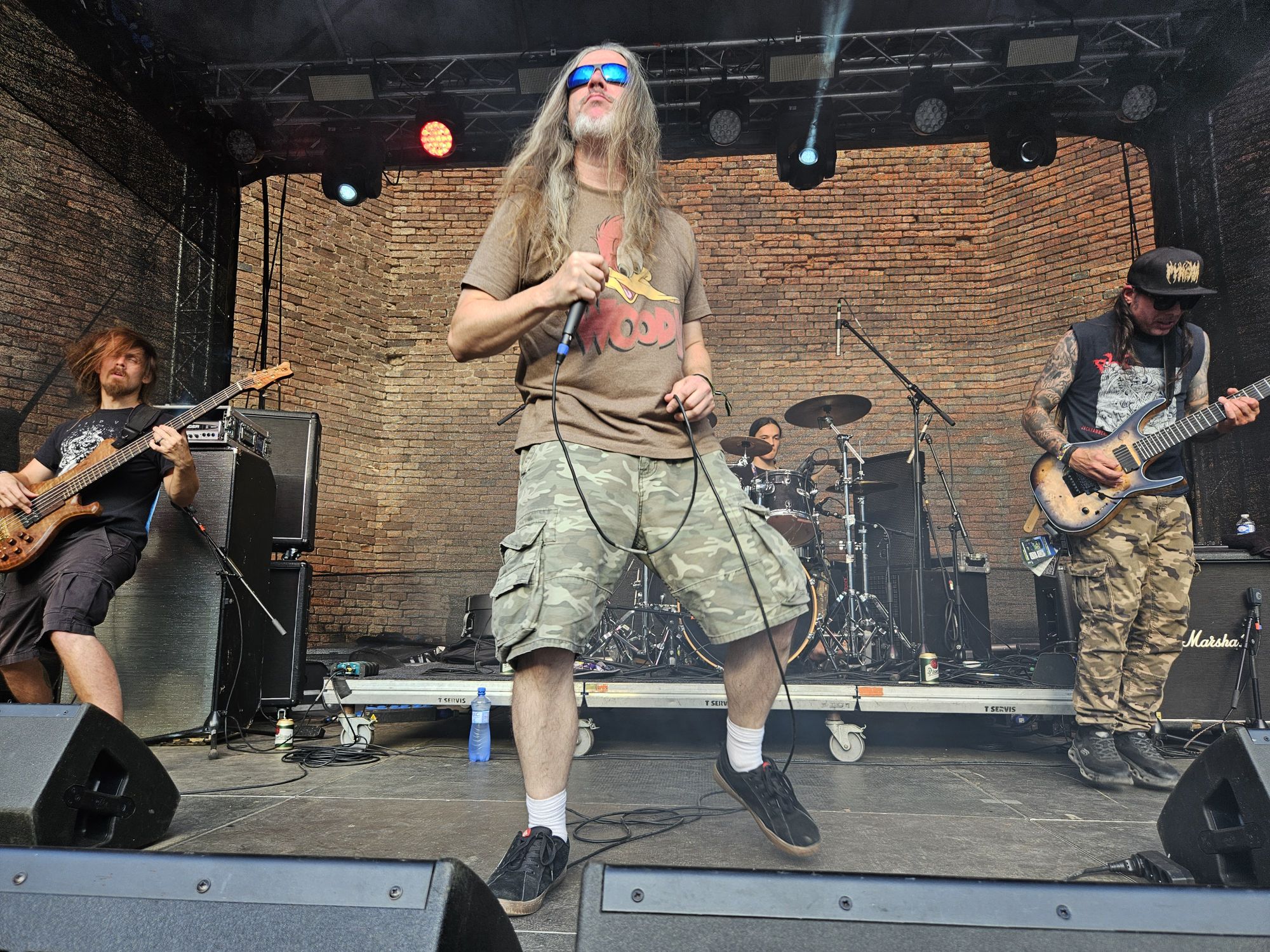
DN: He’s like an old-school kid with a 90s mentality. He’s not super into thrash, but he just hasn’t been exposed to a lot of it. So I feed it to him.
RK: He listens to 60s Genesis!
DN: Yeah
— he loves technical stuff. That’s his thing. He likes to figure things out.
It’s working well.
RK: I’m actually starting a side project
with him. Let’s put this out there — it’s called Placenta
Garden, a grindcore project I’ve wanted to do for years. Nikhil’s
going to be in it, either on drums or guitar. Danny will do vocals, and Nikhil
will be a second vocalist too — I want that dual-vocal style like Insect
Warfare.
You’re wearing a P.L.F. shirt…
RK:
They're my favorite grindcore band. Dave and Brian — Brian was one of my
favorite drummers ever. I love those guys. It’s not just music — it’s a feeling. It’s beyond fast
thrash, and I love that more than death metal. (laughs)

https://sickdrummermagazine.com/the-drummers/death-grind/nikhil-talwalkar-interview-january-2026/
tvl Placenta Garden... snad to nebude moc vyměklý :-D
otázka s hulením nandala nejvíc :))
ad zvuk - že se povedl Epilogue souhlas, ale s Eugenics a posledním ty odpovědi teda eh ... ale tak holt když " "nikdy jsem nechtěl, aby (kytara) zněla jako kytara. Vždycky jsem chtěl, aby zněla jako klávesy" tak to je hodně někde jinde no :)
a vršek bicích bez samplů bych věřil, ale jak se dá bez triggerů atd. udělat to měkoučký čvachtťapičkování (a proč?) to teda fakt nechápu
třeba nazvučení letošního EP Anal Stabwound mi k tomuhle stylu sedí víc
trošku škoda, že ses jich nezeptal na ten měkkej, výškovej, umělej, vykastrovanej zvuk a jestli jsou spokojený s produkcí německýho heavík producenta, ale nejspíš by tvrdili, že jo, takže... :)
mj. "Daniel řekne: „To je moc teplý,“ což znamená, že to není dost brutální nebo zní moc vesele."+ s tou inspirací hudbou z videoher a thrashem - tím sami +- vystihli problém, kterej s touhle kapelou trochu mám :), byť je čím dál víc doceňuju
jsem zvědavej na tu grindcore kapelu s Nikhilem, doufám v Insect Maruta se zvukem blíž FiR (snad jim do toho bude Nikhil kecat, aby to mělo trochu koule)